 Some notes on “Torture and the Ethics of Photography” (2007) by Judith Butler
***
One can easily think that by analyzing photography of torture from the Abu Ghraib camp in Iraq by American soldiers, Judith Butler mimics torture in order to produce certain criticism about it. That is, Butler, in “Torture and the Ethics of Photography” (2007), would fall, somehow, in the predicament of most literary and discursive criticism. This predicament is rightly pointed out by Carlos Alonso, since —according to Alonso— most criticism merely mimics the same critical stance already depicted by the original work. From this perspective, the forms that the photography of torture from the Abu Ghraib camp has affected society, already point out a severe criticism of American society and of postmodern times. Yet, Butler’s perspective strives to open a place for ethics in this turbulent context.
Most of Butler’s text dwells in an intricate space. While we see how the text is built, that is we witness Butler’s train of thought —not to mention that this text was a public talk—, at the same time we lack a certain point of rupture, or a precise critique of what is really at stake when reading, interpreting or witnessing photographs of torture. I am not saying that the way the text concludes does not address a major problem. If the “not seeing”, that all of us share, is a conditioning condition for framing our disavowal of ethics when witnessing torture, then, we somehow embrace our norm. This means that ethics, for our postmodern and neoliberal world, no longer care for the other. This, for sure, is a big problem. However, it is not clear what does Butler has to say about this disavowal of ethics.
While we read rejections of Susan Sontag’s reading of the ethical force of photography, Butler only addresses the importance of learning where and how what we see —in photography and in reality— is framed. That is, that beyond the way photography mirrors back “the final narcissism of our desire to see and to refuse satisfaction to that narcissistic demand” (966) —in Sontag’s terms—, for Butler what is at stake is “to learn to see the frame that blinds us to what we see that is also matter. And if there is a critical role for visual culture during times of war it is also precisely to thematize the forcible frame, the one that conducts the dehumanizing norm” (966; emphasis added). The problem of the forcible frame is that it is one of many frames that shape, form and sustain photography. In the end, photography would be the space that happens between the camera lens and the targeted object. Photography would be a continuum of frames and ethics would emerge precisely as a mechanism to force a frame, to decide when and how to cut the continuity of the frames.
Butler was writing in years prior to the boom of selfie. Yet, the soldiers who took the photos of torture were sharing the same thirst and excitement that each of us has when taking a selfie. If reality can be registered by simply pressing some buttons, then, a camera goes hand in hand with desiring production. This means that photography cannot be stopped, since everyone can and will register things the way they want to (or triggered, of course, by the way reality affects them and habituates them). Thus, the criticism of photography should go beyond identifying the forcible frame, since knowing about this frame won’t stop us from eating from the trashcan of ideology everyday —as Slavoj Žižek puts it in Perverts Guide to Ideology (2012).
 inspirada en el cuento de Cortázar, sino que ambos textos comparten ciertas interrogantes enrevesadas en ese marco tejido por la modernidad que se extiende hasta nuestros días. Estos textos se preguntan por las posibilidades de un cuento (Cortázar) y una película (Antonioni); por el rol de los productos artísticos en las sociedades capitalistas post segunda guerra mundial; por el rol del escritor, fotógrafo y cineasta; y por el rol de aquellos que participamos de la lectura o del cine. Así, ambos textos son autorreferenciales, juegos de espejos. Con esto, claro está, no es que otras lecturas no sean posibles ni necesarias, sino que la autorreferencialidad de ambos textos y sus implicaciones son las condiciones condicionantes de todas las demás lecturas.
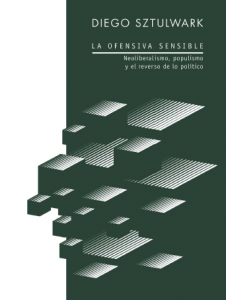 Pensar desde la crisis no es pensar sobre la crisis. Hay, al menos para mí, un saber desde la crisis que es similar a la suspensión —o el paso hacia atrás— de la infrapolítica, a la exposición de la inestabilidad de cualquier verdad fundacional de la anarqueología, a la imposibilidad de nombrar el cambio o el régimen consecutivo en el momento de interregnum y a la semiótica de la contrapedagogía de la crueldad. Este saber radicaría en eso que Diego Sztulwark llama experiencia plebeya, que “no es la revolucionaria, porque no supone ni da lugar a una política específica, aunque sí involucra una relación explícita y desprogramada con la propia potencia, una indecibilidad de su propio lugar en relación con la axiomática del capital” (57). Así, si la existencia (y la vida) para pensarse debe(n) dar un paso atrás, no llenar los huecos del pasado compulsiva e inquisitorialmente, dudar de someterse a la fuerza del capital, desconfiar terriblemente del estado, pero también apostar por uno que sea restituidor, se debe a que sólo dentro de la sensibilidad plebeya es posible ver formas de vida que desbocan la “razón” del estado y la paranoia del capital. La ofensiva sensible: neoliberalismo, populismo y el reverso de lo político de Diego Sztulwark ofrece, quizá, uno de los aportes más interesantes para repensar el excedente de vida (y muerte), de potencia y de deseo que ha dejado el neoliberalismo en su producción de subjetividades en América Latina (por su puesto, claro, con énfasis en la historia moderna y reciente de Argentina).
 Algunas apostillas sobre la visita de Rita Segato
 Los 12 relatos que forman la colección Las cosas que perdimos en el fuego (2016) de Mariana Enríquez pudieran ser eso que el título evoca. Es decir, que cada relato sería algo que se perdió en la hoguera de ese fuego fatuo al que llamamos, por comodidad, postmodernidad. Míticamente, el fuego es aquello que Prometeo robó para alumbrar las tinieblas en que vivían los mortales griegos. El fuego de Enríquez tiene carácter prometeico y ritual. Sin embargo, los cuentos no alumbran nuestra oscuridad, sino que, con sus llamas, nos oscurecen dentro un hornillo demente, adicto y hambriento que no se puede parar, que todo se traga. Este es el fuego ritual de la posmodernidad. En este sentido, las cosas que perdimos en el fuego son familias, casas, pueblos del oriente argentino, inocencia, maridos, hijos, parejas, niños criminales y asesinos, gente deforme e intoxicada, mujeres incendiarias, madres adictas y preocupadas, padres ausentes, ríos contaminados, trabajos, huérfanos y religiosos enloquecidos.